


I had a short video go somewhat viral this week, in which I shared the news that Esquire magazine in Singapore generated an interview with its cover star because, according to a statement they gave CNA Lifestyle, “due to his demanding schedule, he was only able to complete a photo shoot and was unable to respond to our interview questions in a timely manner.”
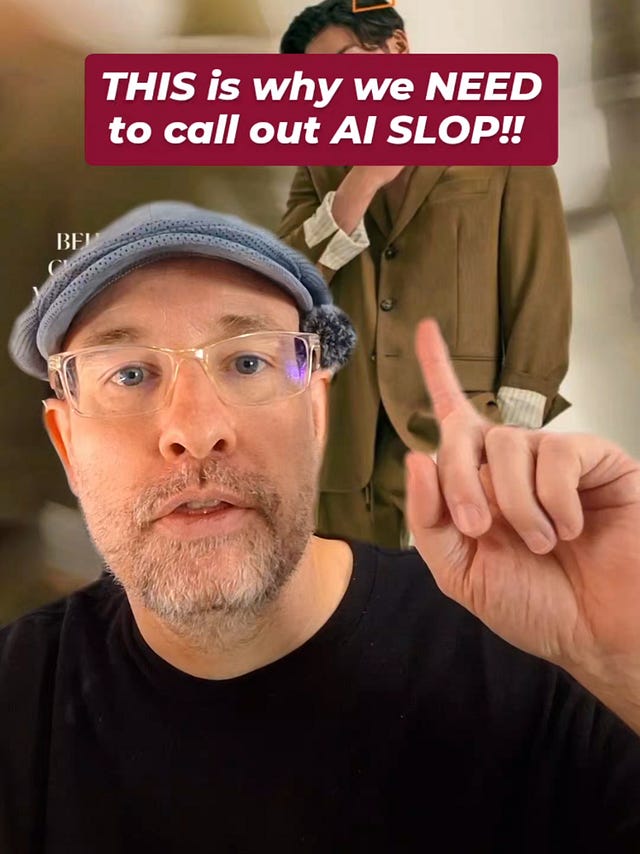
 Tiktok failed to load.
Enable 3rd party cookies or use another browser
The statement further justifies Esquire’s actions by claiming that: “After several attempts to secure his responses, we chose to pivot the editorial approach to align with the March issue’s theme: Echoes.”
But they didn’t stop digging there…
“The use of AI was a deliberate creative decision intended to reflect this theme; exploring the ‘echo’ of a persona in the digital age in the absence of the physical subject.”
So, basically, what they’re saying is - it’s art you idiot, you just didn’t get it! Well, if I didn’t get it nor did a large swathe of their readers and other online commentators who voiced their displeasure in no uncertain terms as you can see:
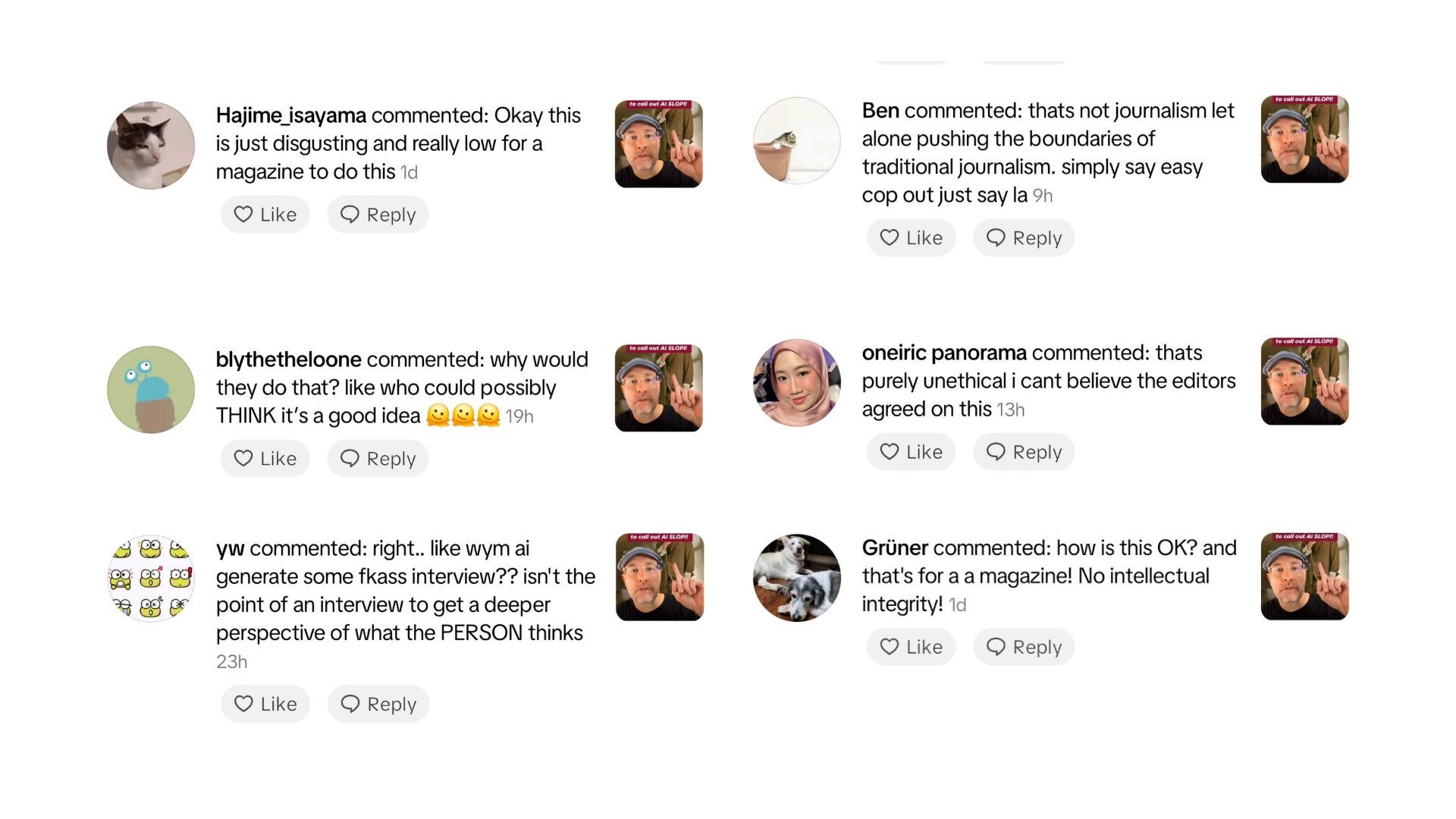
The statement from Esquire does not say whether Mackenyu or his people condone the actions, which were based on feeding an LLM the actor’s previous interviews to generate responses to new questions but, having spent a part of my career in the dark arts, I could see why they might agree to it.
Using an AI to generate interview responses has some undeniable benefits for talent agencies and publicists. It means their clients will always be on message, will never say anything controversial and can be everywhere all at once in multiple languages. In fact, as more celebrities scan and license their faces, voices and bodies to AI companies, generating whole appearances could be tempting - after all, many of them don’t enjoy the promo that goes along with making movies and music, as Michelle Pfeiffer once famously opined:
“I act for free, but I demand a huge salary as compensation for all the annoyance of being a public personality.”
Mackenyu’s case may sound trivial and of course not every famous person has something to say worth hearing, but I for one love to read and listen to interviews with credible actors and musicians about their craft, the context in which they practice it and how that changes over their career. Interviews with legendary performers such as Al Pacino or Paul McCartney are very different across the years as they mature, look back on their legacy and forward towards their maturity. AI freezes them in carbonite.
However, by far the most troubling impact of AI generated interviews is that the interviewee would never have to face down a journalist who may be trying to hold them to account. And if you think that’s a temptation for celebrities, imagine how much politicians and CEOs would love it?
More than a few people have accused me of being a Luddite* about AI, which I strongly oppose. Just look at the video I made above; it uses AI to generate the captions and to calculate the difference between me and my background so that I can place another image behind me. But we need to decide what AI is best used for and what limits should be placed on that use.
For instance, there are plenty of cars that can drive at speeds over 200mph but we don’t allow them to do so because it serves no real purpose outside of professional racing and is too dangerous for drivers, passengers and everyone else on the road.
Even with the many restrictions and regulations already in place on drivers such as licensing, speed limits, passenger limits, emission limits and seat belt laws, cars STILL kill 1.19 million people per year, according to World Health Organization (WHO) data, which amounts to over 3,200 deaths per day. An additional 20 to 50 million more people suffer non-fatal injuries, often leading to long-term disabilities AND road traffic accidents are a leading cause of death amongst children.
But we’re not talking about cars here, we’re talking about a technology that its own best advocates claim “will most likely lead to the end of the world” - Sam Altman, CEO, Open AI.
So, should the press whom we will come to rely on more and more to help us separate fact from AI-generated fiction be allowed to make up book reviews and interviews amongst many other types of content? NO.
Should they be able to use it to conduct research, transcribe interviews and check spelling and grammar? YES.
Should they be able to use it to enhance imagery and generate illustrations? Let’s discuss it but remember, AI isn’t a cure-all for every modern inconvenience whether you’re a journalist struggling to pin down an interviewee, or a politician or business leader trying to avoid scrutiny. As the volume of slop in our feeds increases exponentially it becomes both the core duty and value of so-called “traditional media” to rise above it and do better because eventually the tide will turn, in fact it already is.
* The Luddites were misunderstood - they didn’t hate technology, they hated the factory owners who used it to increase productivity whilst cutting wages, hiring unskilled labor, and creating unfair working conditions, sound familiar?
P.S. Don’t miss next week’s issue of Pro-Human in which I exclusively interview Michael Jackson in advance of his new biopic opening at cinemas 😜
To Do List
My recommendations for new things to read, watch, look at, listen to and do this week:
Another great example of our AI slop poisons public discourse was uncovered by the BBC who found the person responsible for churning out animated Lego videos on behalf of the Iranian government, which are proving surprisingly popular and effective.
I believe the backlash to the Esquire story and other misuses of AI in entertainment are evidence that nobody, knowingly, wants to read, watch or listen to AI slop but unfortunately that doesn’t explain the virality of Fruit Love Island, an AI generated parody of Love Island featuring characters like Plumero and Watermelina, watched by millions! Read: Think Love Island is bad? Wait until you see the AI fruit version. (Interestingly, when popstar Zara Larsson admitted she watched it she got massive backlash too 🤔).
On Wednesday I’m seeing the iconic Jesus & Mary Chain at Singapore’s Esplanade and on Sunday I am returning with my daughter to see Roald Dahl’s BFG performed with puppets, all tickets available from
Finally, They Might Be Giants are back with a new album of jangly guitar pop coming out TOMORROW so why not preview the first three tracks and pre-save ‘The World Is To Dig’ today?
Right, that’ll do ya. Cheers, Nx
In ancient times, a pop star's press agent would prepare "interview" answers for Tiger Beat and the rest. This is worse: AI will soon begin ingesting previous AI-generated interview slop. Like a dog eating its own vomit.
Next step: an AI-generated actor. Think Wm Gibson's Idoru.